


Punjab PSER Survey 2026 is a program through which data of all families is collected so that they can be registered in different government welfare programs. Based on this survey, the financial and economic situation of families is assessed and deserving and poor families are identified, so that the government can provide them facilities through financial assistance, health, education, housing, and other welfare programs. Residents can register themselves in the PSER Survey online or at designated registration centers by providing information about their family and economic conditions. It is important to provide correct information in the PSER Survey because deserving families are identified based on it. After completing the survey, eligible families can benefit from different government assistance programs, financial help, health, education, and housing facilities.
Families whose PSER data is not updated may face delays in government assistance programs or may miss some facilities. Through the Punjab PSER Survey 2026, correct information of the public is collected so that government assistance can reach deserving families. To get Ramadan 2026 relief and other government facilities, residents of Punjab should register or update their PSER record as soon as possible.
The registration process for the Punjab PSER Survey 2026 is now easier than before. People of Punjab can register for the PSER Survey through both online and offline methods. Deserving families can register online through the official portal or visit facilitation centers and Union Council offices for help. By completing the PSER Survey with correct information, eligible families can easily benefit from government assistance programs and other welfare schemes.
What is the Punjab PSER Survey 2026?
Punjab PSER Survey 2026 is a program created by the Punjab Government to identify poor and deserving families. Through the PSER Survey information such as the family’s income, number of household members, and living conditions is collected. With the help of this information, the government can provide financial assistance and other welfare programs to deserving families easily and in a better way.
Punjab PSER Survey 2026 collects all information about each household including:
- Information about the income and employment of family members
- Number of family members whose expenses are managed by the household
- Education and literacy status
- Information about the condition of the house and existing items and assets
Punjab PSER Survey 2026 helps find out which families need government assistance. Families whose records are correct and updated in the Punjab PSER Survey 2026 have a better chance of receiving financial assistance on time. In addition, fake or multiple applications are also checked and removed, and those families are declared ineligible. Government assistance reaches poor families through Punjab’s welfare programs in a better and fairer way.
Punjab Nigahban Card 2026
Through Punjab PSER Survey 2026, poor and deserving families will receive the Punjab Nigehban Card from the Chief Minister of Punjab. The purpose of this program is to provide financial help to poor families and reduce their difficulties and problems. Through the Punjab Nigehban Card, low-income families will be provided financial assistance directly so that they do not have to pay money to any government employees or face any difficulty. The purpose of starting the Punjab Nigehban Card program is to provide financial assistance to poor and deserving families directly and easily.
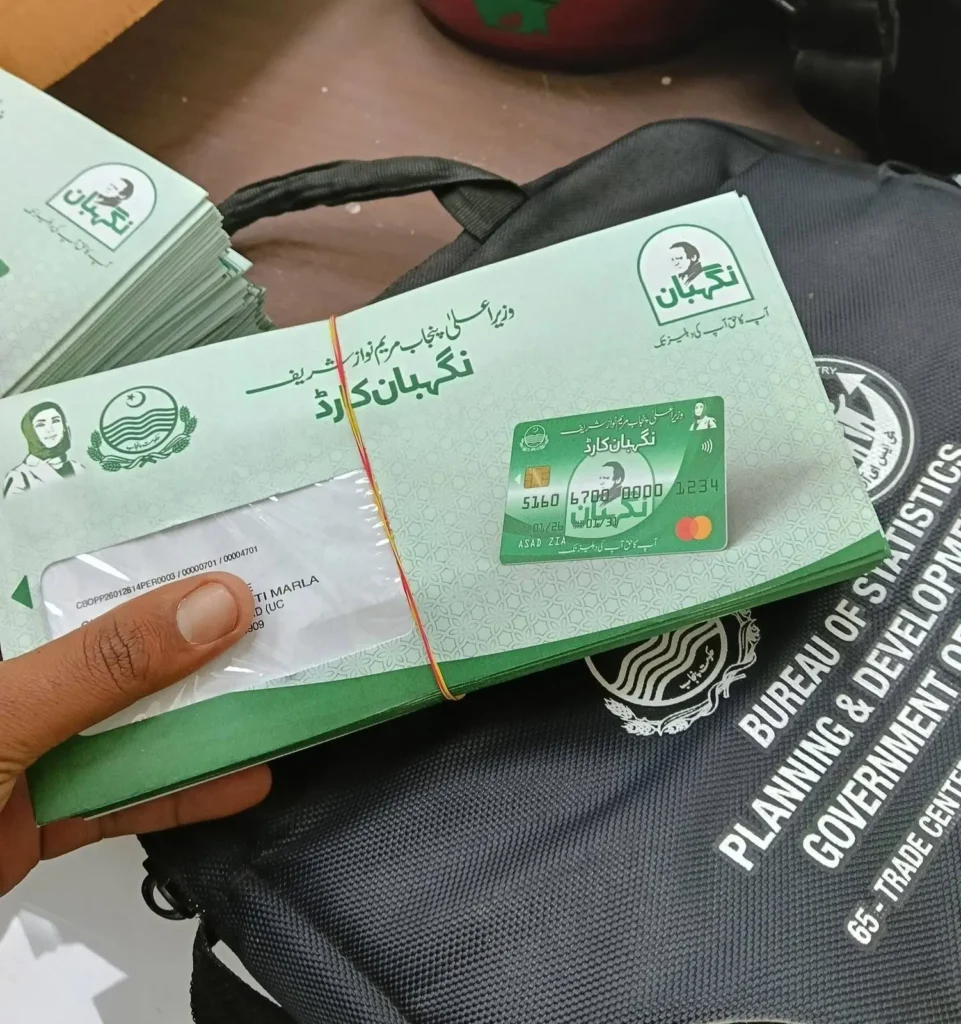
Under the supervision of Chief Minister Maryam Nawaz Sharif, the Punjab Government has started the Nigehban Card Program in 2026 to provide financial help to poor and deserving citizens. The purpose of Nigehban Card Program is to provide direct financial assistance to low-income families so that they do not have to pay money to any government employee or face any other difficulty. Through the Nigehban Card Program, efforts are being made to provide financial assistance to deserving families in an easy, safe, and transparent way.
At the start, many people did not know how to use the Punjab Nigehban Card Program card. The government has given simple instructions for people’s ease. With the help of these instructions, people can withdraw money from the card, make purchases, and also make online payments. Therefore, it is important to know the correct way to use the card so that people can get full benefit from this financial assistance.
Nighaban Card Supported Payment Channels and Services
The Punjab Government has partnered with multiple banking and digital platforms to ensure that the Nigahban Card can be used efficiently. Beneficiaries can access their funds through several channels, giving them flexibility in receiving payments and making transactions.
Here is a clear table showing all supported services:
| Payment Service | How It Helps Beneficiaries |
|---|---|
| Bank of Punjab (BOP) | Card issuance, support, and secure ATM withdrawals |
| UBL Omni | Assisted branchless banking services |
| HBL Konnect | Easy access for cashless payments in remote areas |
| AlfaPay | Digital wallet for convenient online and POS payments |
These options ensure that beneficiaries, whether living in cities or remote villages, can access their funds without difficulty.
Official Helpline Support for Cardholders
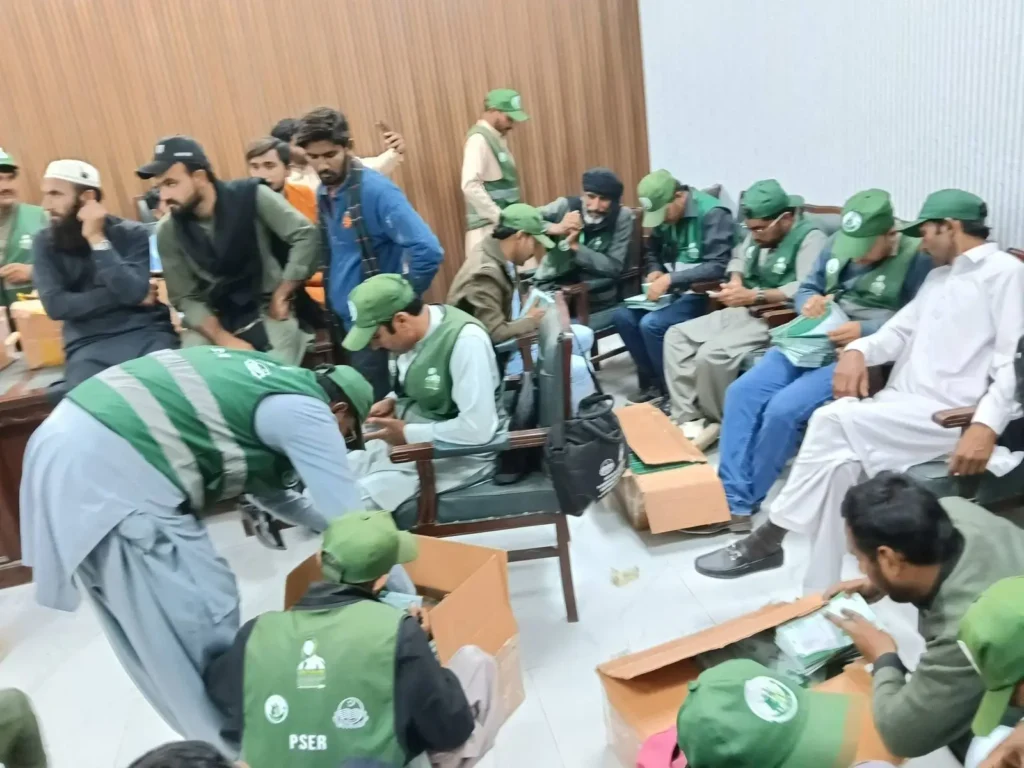
The Punjab government has established specific institutions for using the Nigehban Card and getting registered in the PSER survey, where deserving families can get solutions to any kind of difficulty and register any complaint. Deserving individuals can seek help from these institutions in any kind of trouble. If anyone, whether a government employee or not, is deducting from your payment or financial assistance, deserving individuals should register a complaint against them at these institutions so that no one can take away their rightful share.
| Helpline Service | Contact Number |
|---|---|
| BOP Customer Support | 042-111-267-200 |
By using the helpline, deserving individuals can get help directly from the government without relying on any wrong or unofficial source. For correct information and guidance, always contact this helpline.
How PSER Connects to Ramzan Relief Programs
Ramzan relief packages in Punjab are now being provided completely on the basis of data. The government uses PSER data to determine how many families need cheap ration, flour and financial assistance. If a family’s record is not available in PSER, then despite being needy, it may automatically be deprived of assistance.
Benefits linked to PSER include:
- Affordable ration bags containing essential food items
- Discounts on flour and other daily essential items
- Direct financial assistance for low-income families
- Emergency assistance during the holy month of Ramadan
With the help of verified PSER data, the government can easily deliver assistance to deserving families, prevent ration shortages, and reduce delays in providing assistance.
Who Should Register or Update Their PSER Record in 2026
Many people think that PSER registration is only for new people, but this is not the case. Families who have already been surveyed should also check and update their information. If there has been any change in the number of family members, income, or living conditions, it may affect eligibility for Ramzan relief and other government assistance.
You should register or update your PSER record if:
- Your family was not included in any previous survey
- Your income has increased or decreased significantly
- A new member has been added to your family
- You were previously rejected from any government assistance program
- You want to maintain your eligibility for current and upcoming subsidy programs
Families who regularly update their PSER records face fewer difficulties during verification and often receive assistance sooner compared to families who delay updating their information.
Step-by-Step Online Registration Process
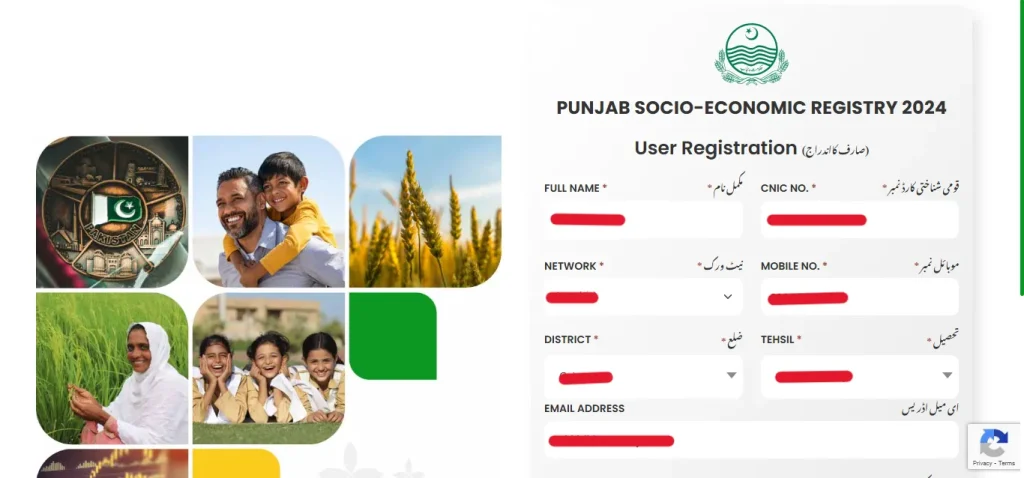
The PSER online registration process is easy, but it is necessary to complete it carefully. According to my observation, even a small mistake can cause a delay in approval. The complete method for online registration is given below.
- Open the official PSER website from a computer or mobile phone.
- Enter the CNIC number of the head of the household and the mobile number linked to it.
- Verify your identity through the OTP or verification message received on your mobile phone.
- Enter complete household information, including details about income, family members, employment, education, and residence.
- Carefully check all the information before submitting the form to avoid any kind of mistake.
It is very important to remember that PSER registration is completely free. No fee needs to be paid for registration online or at any office, and government staff are also not allowed to charge any kind of fee.
How to Apply for the PSER Survey Program 2026 Step-by-Step Guide
After completing registration on the PSER portal, the next step is to submit a new PSER survey application. This application will determine whether you are eligible for Ramzan relief and other assistance programs of the Punjab government or not. Here, we are explaining the complete step-by-step method in an easy and simple way so that there is no mistake while submitting the application.
Step 1: Start a New Application
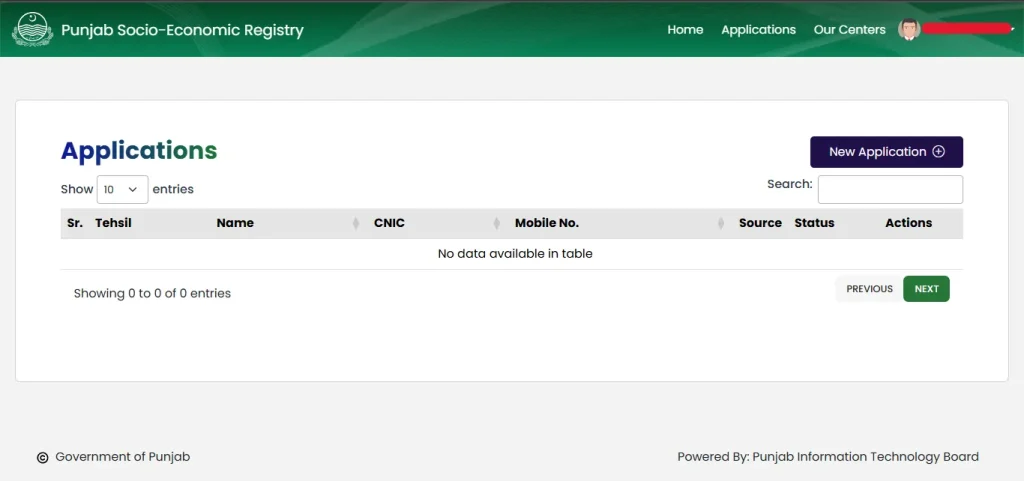
- Open the official PSER portal and log in using your CNIC number and the password created during registration.
- Click the “New Application” button to start the application.
- A declaration form will appear in front of you. Read it carefully, click on the verification box, and click Save to proceed.
Step 2: Enter Family Head Details
Next, provide the essential information about the head of your household. You will need to enter:
- Full name of the head of the household
- CNIC number
- Mobile number registered with the CNIC
After entering this information click the “Submit” button. A verification code (OTP) will be sent to the mobile number you provided. Enter this code to verify your identity and move to the next step.
Important point: Make sure your mobile number is active and registered with your CNIC otherwise your verification will not be completed
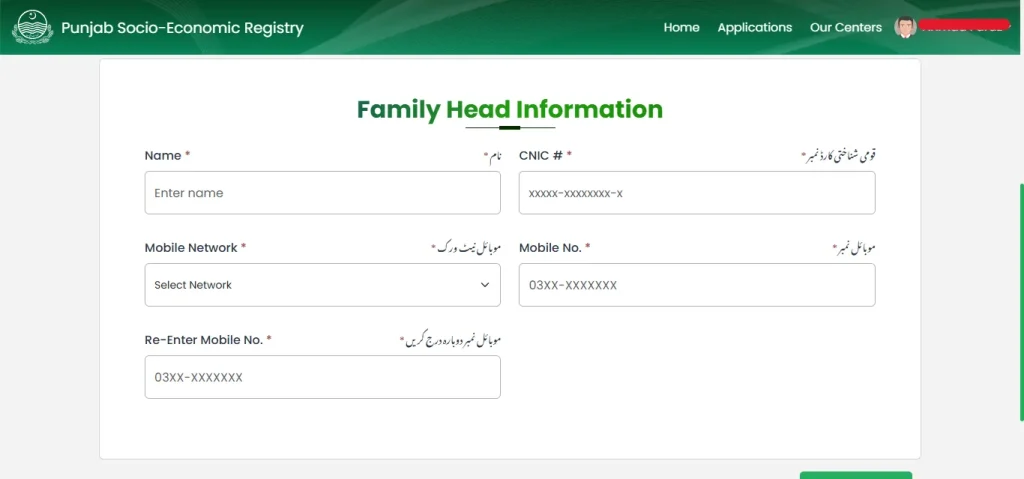
Step 3: Add Family Members
In this step you have to enter the information of every family member separately. This helps PSER get better information about your family and helps decide which government assistance programs you are eligible for
For each family member, provide the following details:
- Full name
- Gender
- Date of birth
- CNIC or B-Form number (for children)
Make sure all the information is correct because any mistake can delay your application or affect your eligibility for Ramzan relief and other PSER assistance
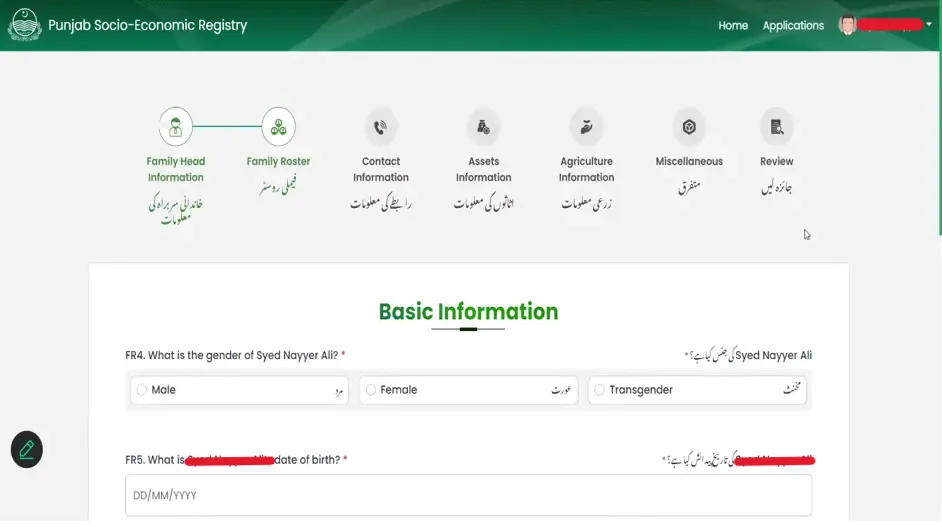
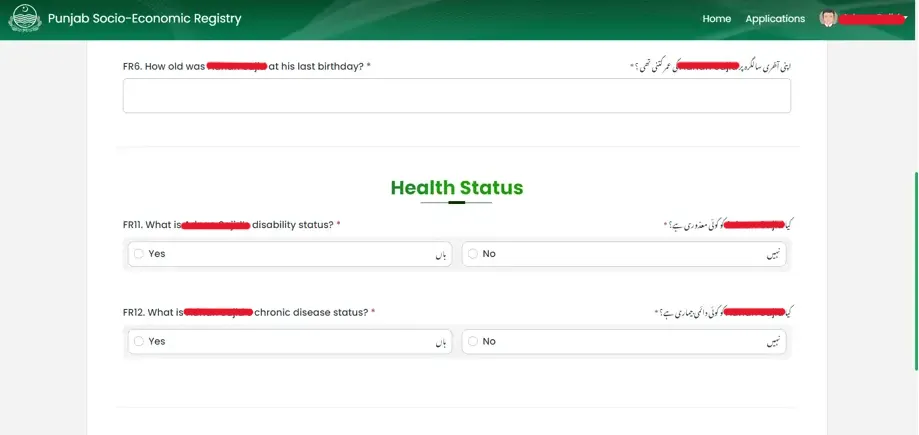
Health Information
In the next step you have to provide information about the health of every family member. If any family member has a disability or a long term illness that affects their daily life then enter this information as well.
If no one in your family has any health problem then select No. Providing correct health information helps PSER understand your family needs and assess your eligibility for government assistance programs.
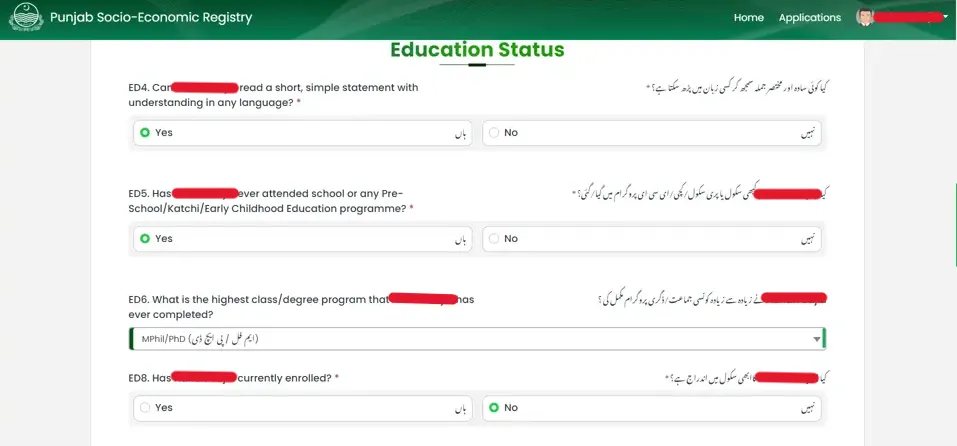
Education Details
In this step you have to provide information about the education of every family member. Tell whether they are educated or not and what their highest educational qualification or education is.
Correct education information helps PSER understand the educational situation of the family which is important for planning government assistance and welfare programs.
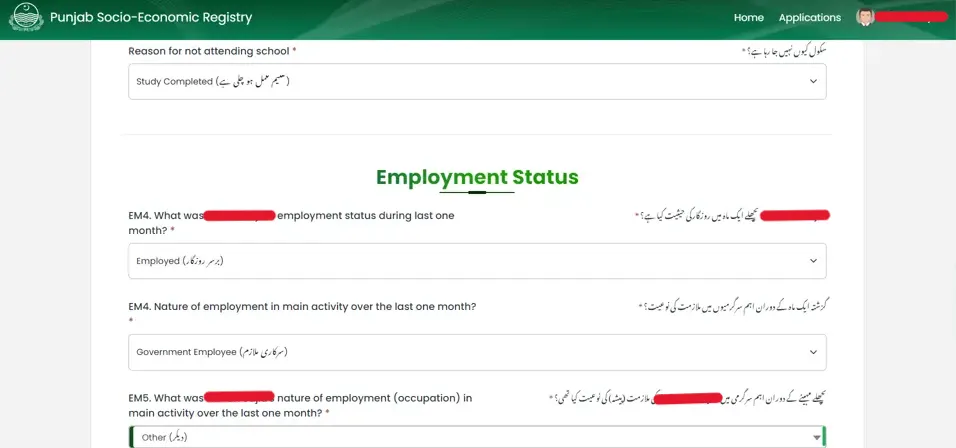
Employment Details
Now you have to provide information about the work of every family member. Tell whether they were employed or unemployed during the last month and what type of work or employment they do
Correct employment information helps PSER understand the financial situation of your family. This information plays an important role in checking your eligibility for Ramzan relief and other government assistance programs
Step 4: Contact Information
In this step enter the correct contact information of your family. Enter two mobile numbers and the names of their respective networks so that the PSER team can contact you easily
In the next step enter your current and permanent address Make sure all the information is correct Also tell whether your home is in a rural or urban area Correct contact and address information helps the government verify your family quickly and avoid delays in receiving assistance
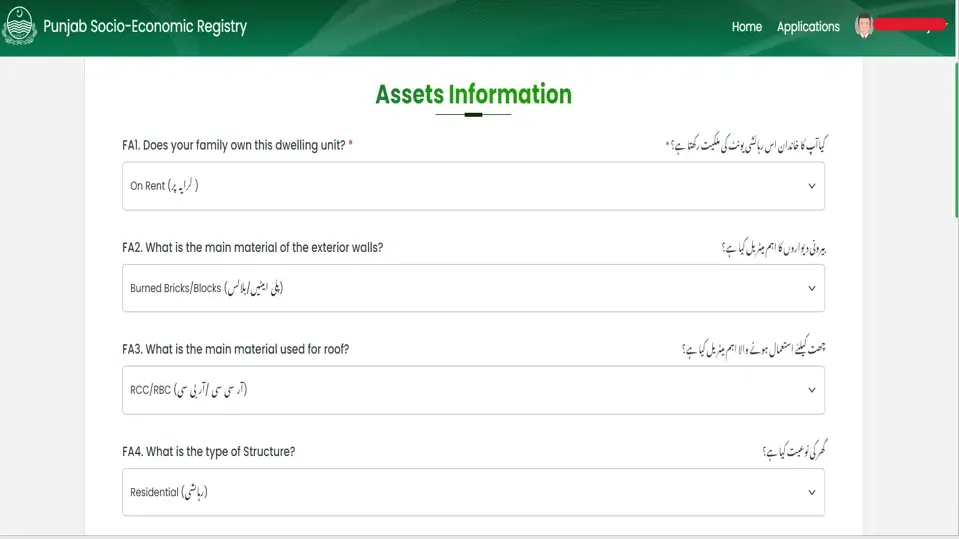
Step 5: Asset Information
This step is very important because it helps determine your family eligibility for PSER assistance programs. Enter complete information about any property or house owned by your family
Include information such as:
- Do you have your own house or flat
- Type of house construction such as bricks or concrete
- Materials used in the house and its construction structure
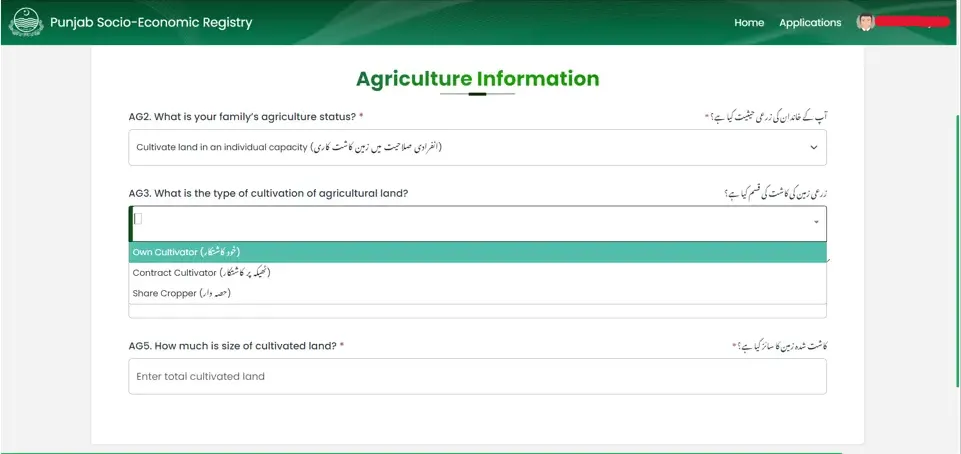
Agriculture Information
In this step, enter information about any agricultural land owned by your family. If your family does not have agricultural land, simply select “No”. If there is land, enter the area of the land, type of cultivation or crop grown, and land ownership status. Accurate agricultural information helps PSER assess your family’s resources and determine eligibility for welfare programs, especially for assistance programs for farmers and rural areas.
Step 7: Miscellaneous Information
In this step, you will have to answer some more questions about your family. These questions help PSER understand the special circumstances of your family. You will be asked whether your family is receiving assistance from any other government assistance program, whether a child in the family died during the last one year, whether you have mobile phone and internet facilities, and whether your family has been affected by any natural disaster during the last five years. Answer all these questions correctly and truthfully, because this information helps the government understand your family’s needs and include you in relevant welfare programs.
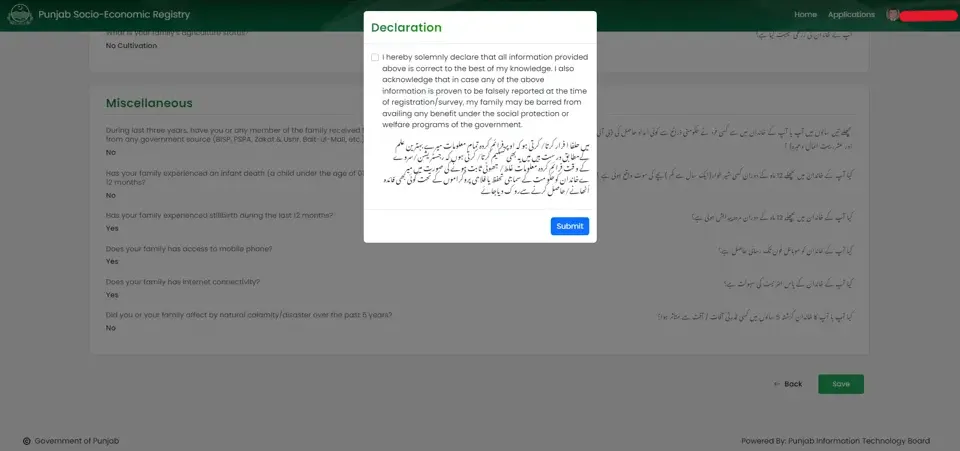
Step 8: Review and Submit
Before submitting the application, check your complete application carefully. Review all the information about your family, household members, income, property, and other details, and make sure everything has been entered correctly. Once you are sure that all the information is correct, click the “Save and Submit” button to complete the application. After the application is submitted, the PSER team will verify your information, and if your family is eligible for Ramadan Relief or any other assistance program, you will be contacted.
How to Check Your PSER Application Status Online?
Checking the status of your PSER application online is very easy. After submitting the application, you can visit the PSER portal and log in using your CNIC number and password. There, you can see the current status of your application and also find out whether your application has been approved, is still under review, or requires any additional information.
- Open the official PSER portal.
- Log in using your CNIC number and password.
- Open your list of applications and check the current status of each application.
For further help or in case of any issue, contact the PSER helpline at 0800-02345.
Which documents are required for registration in the PSER survey?
To register for the Punjab PSER Survey 2026, keep all your documents ready in advance so that you do not face any kind of difficulty during registration. When registering, enter all document information and pictures correctly so that your application is not rejected. The details of all the documents required for this are given below.
- Family head’s number
- B-Form numbers of all children
- Mobile number currently in use
- Approximate monthly income of the family
- Property ownership
- Details of household conditions
To register for the PSER survey, it is necessary to keep all these documents with you before registration so that you do not face any kind of difficulty or delay during the registration process.
Eligibility Criteria for Registration in the Punjab PSER Survey 2026
PSER has set clear eligibility criteria for assistance programs. Families that do not meet these conditions may have their applications rejected or approval may be delayed.
| Requirement | Explanation |
|---|---|
| Residency | Must be a resident of Punjab |
| CNIC | Valid CNIC issued by NADRA |
| Household Head | Only one registered head per household |
| Income Level | Low to middle-income households |
| Mobile Number | Active number linked with CNIC |
| Data Accuracy | Information must be verified |
By meeting these conditions, your household remains included in government records, and you may be eligible for Ramadan Relief and other assistance programs linked to PSER. Not every household has access to the internet. For such families, the Punjab government has also provided an offline registration facility, through which they can complete their registration.
- E-Khidmat Markaz and PSER desks
- Union Council offices in every district
- Government facilitation centers with trained staff
Offline Registration Procedure
- Senior citizens
- Households in rural areas that do not have smartphones
- Families with low educational qualifications
People who cannot register for the Punjab PSER Survey can get help from government staff. They will enter all their information correctly in the PSER Survey so that they do not miss financial help or welfare programs.
What mistakes should be avoided during registration in the PSER Survey?
During registration in the PSER Survey, there are many small mistakes that can cause the application of an ordinary citizen or deserving family to be rejected. To avoid these mistakes, you should keep the following points in mind and enter all your records correctly so that you can receive financial assistance on time
- Enter a correct and valid CNIC number
- Provide accurate income information
- Use only an active mobile number registered with the CNIC
- Avoid registering the same family more than once
- Carefully complete all required information
After completing the PSER registration form, check it carefully to make sure that you have entered all the information correctly, so that your application can be approved as soon as possible. If there is any mistake or problem, correct it immediately.
Benefits of Registration in the PSER Survey
There are many benefits of registering on time in the Punjab PSER Survey 2026. It helps you get included in financial assistance and welfare programs on time, and you do not have to face many difficulties.
- The government can accurately estimate the number of deserving people and plan resources better.
- Families can receive Ramadan Relief on time without any unnecessary delay.
- Registering early also increases the chances of being included in future welfare programs on a priority basis.
Families that delay registration often face difficulties during verification, and if assistance resources are limited, they may also miss out on the assistance.
Which Programs linked under Punjab PSER Survey 2026?
Punjab PSER Survey 2026 is connected with many programs. These programs are welfare programs and financial assistance programs, because of which deserving people keep receiving assistance. This helps reduce their financial difficulties and problems.
- Ration Card for food items and ration assistance
- Himmat Card for help with daily expenses
- Kisan Card for farmers and growers
- Widow Card for financial help for widowed women
- Livestock Program for small-scale livestock farmers
- Ramzan Nigehban Program for monthly financial assistance during Ramadan
- Benazir Kafalat and Nashonuma Program for helping deserving and vulnerable families
- Apni Chhat Apna Ghar Program for financial help to build a house or for housing facilities
- CM E-Taxi Scheme for providing taxi vehicles to young people and creating job opportunities
- Parwaz Card Program for helping skilled people get job opportunities abroad
- Aaghosh Program for providing financial help to pregnant women and mothers of newborn babies
- CM Solar Scheme for providing solar systems to deserving families and reducing electricity costs
Registration in the Punjab PSER Survey helps make sure that deserving families can get full support for basic needs, education, and job opportunities.
How to Check Your Status Online in the Punjab PSER Survey 2026?
Checking your status online in the Punjab PSER Survey is very easy. You can check your application information from home and also find out whether your application is complete or not.
- First, go to the official PSER portal
- Log in using your CNIC number and password
- Check the status of your submitted application
For more help, families can contact the PSER helpline. The helpline number is 0800-02345. If there is any delay in the application, you can contact this number to check your application status and get guidance if there is any problem.
Conclusion
The Punjab PSER Survey is very important for deserving families because it gives the government information about the conditions and needs of people who need help. It also makes it easier to provide help through different welfare programs. If you have not registered in the PSER Survey yet, enter your information correctly and keep checking your application status so that it is easy for you to get the benefits of any related program.